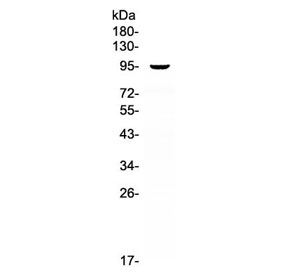
CD106 (cluster of differentiation 106) also known as vascular cell adhesion molecule 1 (VCAM-1), is a protein that in humans is encoded by the VCAM1 gene. In inflammatory conditions and in cardiac allografts undergoing rejection, VCAM1 is upregulated in endothelium of postcapillary venules. Arterial expression of VCAM1 is also found in experimental models of atherosclerosis in the rabbit. This gene is mapped to chromosome 1 by Southern analysis of somatic cell hybrids. VCAM-1 functions as a cell adhesion molecule. The VCAM-1 protein mediates the adhesion of lymphocytes, monocytes, eosinophils, andbasophils to vascularendothelium. It also functions in leukocyte-endothelial cell signal transduction, and it may play a role in the development ofatherosclerosis and rheumatoid arthritis. CAM741 works similar to cotransin in that it represses the biosynthesis of VCAM1 cells by blocking the process of cotranslational translocation, which is dependent on the signal peptide of VCAM1. Among the lung metastasis signature genes identified, several, including VCAM1, were functionally validated.
Formulation
0.5mg/ml if reconstituted with 0.2ml sterile DI water
Host
Rabbit
Immunogen Region
A recombinant human protein corresponding to amino acids F25-L270 was used as the immunogen for the VCAM1 antibody.
Isotype
IgG
Predicted Reactivity
Human
Reactivity
Human
Recombinant
No
Antigen
VCAM-1
Uniprot
P19320
Buffer
Lyophilized from 1X PBS with 2% Trehalose and 0.025% sodium azide
Format
Antigen affinity purified
Purification
Antigen affinity purified
Storage
After reconstitution, the VCAM1 antibody can be stored for up to one month at 4°C. For long-term, aliquot and store at -20°C. Avoid repeated freezing and thawing.
Applications
WB, ELISA
Dilution
Western Blot: 0.5-1ug/ml,ELISA (Capture): 0.1-0.5ug/ml (BSA-free format available)
 Loading ....