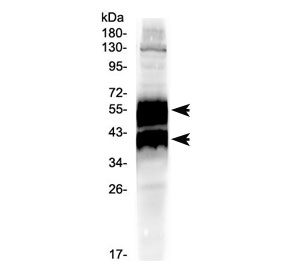
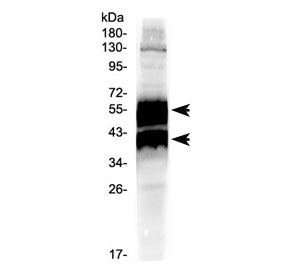
PLAUR (Plasminogen Activator Receptor, Urokinase-Type), also known as UPAR (uPA Receptor) or CD87, is multidomain glycoprotein tethered to the cell membrane with a glycosylphosphotidylinositol (GPI) anchor. PLAUR consists of three different domains of the Ly-6/uPAR/alpha-neurotoxin family. PLAUR is originally identified as a saturable binding site for urokinase on the cell surface. And the gene plays an important role in many normal as well as pathologic processes. The PLAUR gene is localized to 19q13.31. PLAUR is a part of the plasminogen activation system, which in the healthy body is involved in tissue reorganization events such as mammary gland involution and wound healing. PLAUR binds urokinase and thus restricts plasminogen activation to the immediate vicinity of the cell membrane. Thus it seems to be an important player in the regulation of this process. In human coronary artery vascular smooth muscle cells, UPA stimulates cell migration via a UPAR signaling complex containing TYK2 and phosphatidylinositol 3-kinase.
Formulation
0.5mg/ml if reconstituted with 0.2ml sterile DI water
Host
Rabbit
Immunogen Region
Amino acids E230-S286 from the human protein were used as the immunogen for the uPA Receptor antibody.
Isotype
IgG
Predicted Reactivity
Human
Reactivity
Human
Recombinant
No
Antigen
uPAR
Uniprot
Q03405
Buffer
Lyophilized from 1X PBS with 2.5% BSA, 0.025% sodium azide
Format
Antigen affinity purified
Purification
Antigen affinity
Storage
After reconstitution, the uPA Receptor antibody can be stored for up to one month at 4°C. For long-term, aliquot and store at -20°C. Avoid repeated freezing and thawing.
 Loading ....