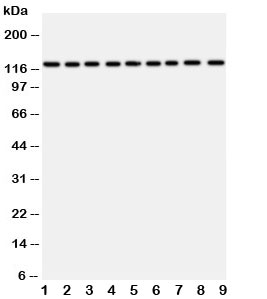
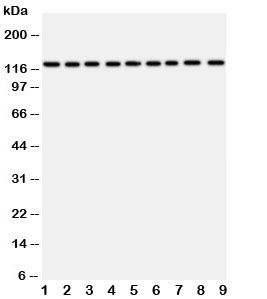
Transient receptor potential cation channel, subfamily C, member 3, also known as TRP3, is expressed in megakaryocytic cell lines and therefore may play a role in calcium homeostasis in megakaryocytes and platelets. Using patch-clamp and whole-cell recordings of human embryonic kidney cells transfected with TRPC3, the protein behaved as an inositol phosphate and diacylglycerol-gated channel, but not as a store-operated channel. The TRPC3 gene, but not other TRPC genes, was damaged in several mutant T-cell lines with defective calcium influx, resulting in expression of truncated transcripts. Reduced calcium channel activity could be reversed by restoration of wildtype TRPC3. It is part of endogenous calcium channels in T lymphocytes and contributes to T-cell receptor-dependent calcium entry into T cells. Neuropathologic studies showed impaired growth and differentiation of dendritic arbors of the Purkinje cells, suggesting that normal TRPC3 plays a role in the development and survival of cerebellar Purkinje cells.
Formulation
0.5mg/ml if reconstituted with 0.2ml sterile DI water
Host
Rabbit
Immunogen Region
Amino acids 836-851 (HSFNSILNQPTRYQQI) were used as the immunogen for this TRPC3 antibody (100% homologous in human, mouse and rat).
Isotype
IgG
Predicted Reactivity
Human, Mouse, Rat
Reactivity
Human, Mouse, Rat
Recombinant
No
Antigen
TRPC3
Uniprot
Q13507
Format
Antigen affinity purified
Purification
Antigen affinity
Storage
After reconstitution, the TRPC3 antibody can be stored for up to one month at 4°C. For long-term, aliquot and store at -20°C. Avoid repeated freezing and thawing.
Applications
IHC-P, WB
Dilution
Western blot: 0.5-1ug/ml,Immunohistochemistry (FFPE): 0.5-1ug/ml
 Loading ....