Tenascin X (TN-X), also known as hexabrachion-like protein, is a glycoprotein that is expressed in connective tissues including skin, joints and muscles. In humans, tenascin X is encoded by the TNXB gene. This gene encodes a member of the tenascin family of extracellular matrix glycoproteins. The tenascins have anti-adhesive effects, as opposed to fibronectin which is adhesive. This protein is thought to function in matrix maturation during wound healing, and its deficiency has been associated with the connective tissue disorder Ehlers-Danlos syndrome. This gene localizes to the major histocompatibility complex (MHC) class III region on chromosome 6. It is one of four genes in this cluster which have been duplicated. The duplicated copy of this gene is incomplete and is a pseudogene which is transcribed but does not encode a protein. The structure of this gene is unusual in that it overlaps the CREBL1 and CYP21A2 genes at its 5' and 3' ends, respectively. Multiple transcript variants encoding different isoforms have been found for this gene.
Formulation
0.5mg/ml if reconstituted with 0.2ml sterile DI water
Host
Rabbit
Immunogen Region
Amino acids DLRAVAVSGLDPARKYKFLLFGLQNGKRH of human TNXB were used as the immunogen for the TNXB antibody.
Isotype
IgG
Predicted Reactivity
Human
Reactivity
Human
Recombinant
No
Subcellular Location
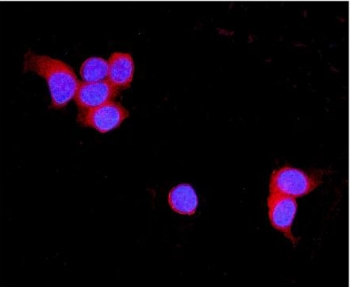
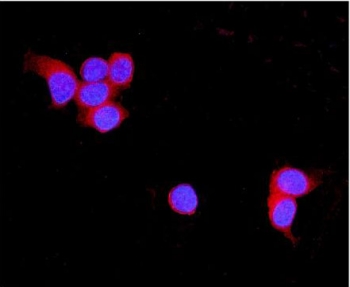
Cytoplasmic
Antigen
TNXB
Uniprot
P22105
Format
Antigen affinity purified
Purification
Antigen affinity
Storage
After reconstitution, the TNXB antibody can be stored for up to one month at 4°C. For long-term, aliquot and store at -20°C. Avoid repeated freezing and thawing.
Applications
FACS, IF, IHC-P, WB
Dilution
Western blot: 0.1-0.5ug/ml,Immunohistochemistry (FFPE): 0.5-1ug/ml,Immunofluorescence (FFPE): 2-4ug/ml,Flow cytometry: 1-3ug/million cells
 Loading ....