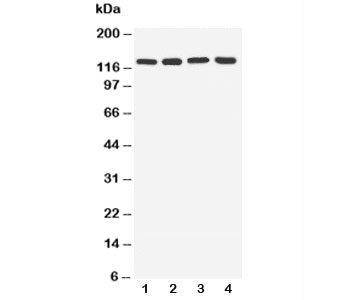
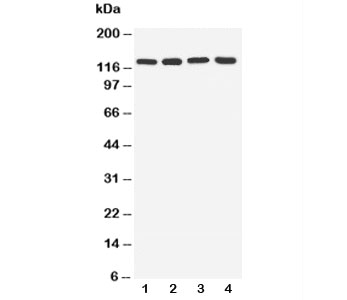
Toll-like receptor 7 is protein that in humans is encoded by the TLR7 gene. Orthologs are found in mammals and birds. It is a member of the Toll-like receptor family which plays a fundamental role in pathogen recognition and activation of innate immunity. TLRs are highly conserved from Drosophila to humans and share structural and functional similarities. They recognize pathogen-associated molecular patterns (PAMPs) that are expressed on infectious agents, and mediate the production of cytokines necessary for the development of effective immunity. The various TLRs exhibit different patterns of expression. This gene is predominantly expressed in lung, placenta, and spleen, and lies in close proximity to another family member, TLR8, on human chromosome X. TLR7 recognises single stranded RNA in endosomes, which is a common feature of viral genomes which are internalised by macrophages.
Formulation
0.5mg/ml if reconstituted with 0.2ml sterile DI water
Host
Rabbit
Immunogen Region
An amino acid sequence from the C-terminus of human TLR7 (QAHPYFWQCLKNALATDNH) was used as the immunogen for this TLR7 antibody.
Isotype
Ig
Predicted Reactivity
Human, Rat, Mouse
Reactivity
Human, Rat, Mouse
Recombinant
No
Antigen
TLR7
Uniprot
Q9NYK1
Format
Antigen affinity purified
Purification
Antigen affinity
Storage
After reconstitution, the TLR7 antibody can be stored for up to one month at 4°C. For long-term, aliquot and store at -20°C. Avoid repeated freezing and thawing.
Applications
IHC-P, WB
Dilution
Western blot: 0.5-1ug/ml,Immunohistochemistry (FFPE): 0.5-1ug/ml
 Loading ....