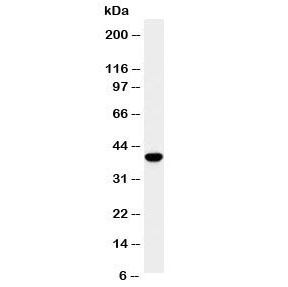
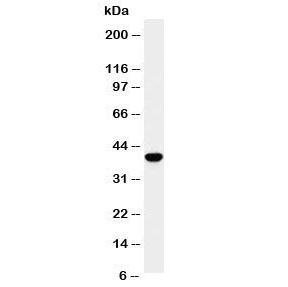
Secreted protein acidic and rich in cysteine, also known as Osteonectin, is a protein that in humans is encoded by the SPARC gene. The human gene is 26.5 kb long, and contains 10 exons and 9 introns and is located on chromosome 5q31-q33. SPARC is an acidic, cysteine-rich glycoprotein consisting of a single polypeptide chain that can be broken into 4 domains: 1) an Ca++ binding domains near the glutamic acidic-rich region at the amino terminus(domain I), 2) a cysteine- rich(domain II), 3) a hydrophilic region(domain III) and 4) an EF hand motif at the carboxy terminus region(domain IV). SPARC is a glycoprotein in the bone that binds sodium. It is secreted by osteoblasts during bone formation, initiating mineralization and promoting mineral crystal formation. It also shows affinity for collagen in addition to bone mineral calcium. A correlation between SPARC over expression and ampullary cancers and chronic pancreatitis has been found.
Formulation
0.5mg/ml if reconstituted with 0.2ml sterile DI water
Host
Rabbit
Immunogen Region
Amino acids 284-303 (DEWAGCFGIKQKDIDKDLVI-human) were used as the immunogen for this SPARC antibody.
Isotype
IgG
Predicted Reactivity
Human
Reactivity
Human
Recombinant
No
Antigen
SPARC
Uniprot
P09486
Format
Antigen affinity purified
Purification
Antigen affinity
Storage
After reconstitution, the SPARC antibody can be stored for up to one month at 4°C. For long-term, aliquot and store at -20°C. Avoid repeated freezing and thawing.
Applications
WB, IHC-P
Dilution
Western blot: 0.5-1ug/ml,Immunohistochemistry (FFPE): 0.5-1ug/ml
 Loading ....