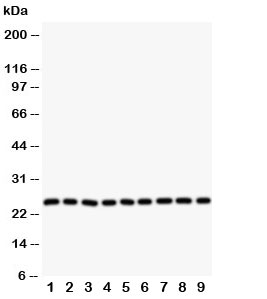
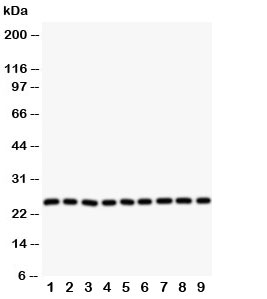
Superoxide Dismutase 2, also called IPO-B or MNSOD, is a mitochondrial matrix enzyme that scavenges oxygen radicals produced by the extensive oxidation-reduction and electron transport reactions occurring in mitochondria. This gene is a member of the iron/manganese superoxide dismutase family. Using a somatic cell hybrid panel containing different segments of chromosome 6, they demonstrated that SOD2 is located in the region 6q25.3-qter which, together with the FISH analysis, indicated that the enzyme is in the distal portion of 6q25. The gene encodes an intramitochondrial free radical scavenging enzyme that is the first line of defense against superoxide produced as a byproduct of oxidative phosphorylation. Adeno-associated viral delivery of the human gene resulted in suppression of optic nerve degeneration and rescue of retinal ganglion cells. The findings suggested that reactive oxygen species contributed to retinal cell death and optic nerve damage in mice with complex I deficiency, and that expression of SOD2 attenuated the disease process.
Formulation
0.5mg/ml if reconstituted with 0.2ml sterile DI water
Host
Rabbit
Immunogen Region
An amino acid sequence from the N-terminus of human SOD2 (QIMQLHHSKHHAAYVNNL) was used as the immunogen for this SOD2 antibody (100% mouse homology).
Isotype
IgG
Predicted Reactivity
Human, Mouse, Rat
Reactivity
Rat, Human, Mouse
Recombinant
No
Antigen
SOD2
Uniprot
P04179
Format
Antigen affinity purified
Purification
Antigen affinity
Storage
After reconstitution, the SOD2 antibody can be stored for up to one month at 4°C. For long-term, aliquot and store at -20°C. Avoid repeated freezing and thawing.
Applications
IHC-P, WB, ICC
Dilution
Western blot: 0.5-1ug/ml,Immunohistochemistry (FFPE): 0.5-1ug/ml,Immunocytochemistry: 0.5-1ug/ml
 Loading ....