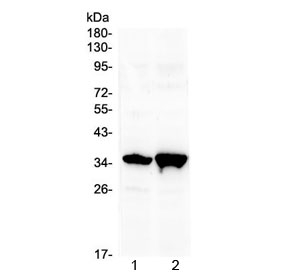
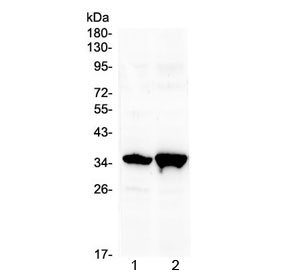
Homeobox protein SIX3 is a protein that in humans is encoded by the SIX3 gene. This gene encodes a member of the sine oculishomeobox transcription factor family. The encoded protein plays a role in eye development. Mutations in SIX3 are the cause of a severe brain malformation, called holoprosencephaly type 2 (HPE2). In HPE2, the brain fails to separate into two hemispheres during early embryonic development, leading to eye and brain malformations, which result in serious facial abnormalities. A mutant zebrafish knockout model has been developed, in which the anterior part of the head was missing due to the atypical increase of Wnt1 activity. When injected with SIX3, these zebrafish embryos were able to successfully develop a normal forebrain. When SIX3 was turned off in mice, resulting in a lack of retina formation due to excessive expression of Wnt8b in the region where the forebrain normally develops. Both of these studies demonstrate the importance of SIX3 activity in brain and eye development.
Formulation
0.5mg/ml if reconstituted with 0.2ml sterile DI water
Host
Rabbit
Immunogen Region
Amino acids 1-32 (MVFRSPLDLYSSHFLLPNFADSHHRSILLASS) were used as the immunogen for the Six3 antibody.
Isotype
IgG
Predicted Reactivity
Mouse, Rat
Reactivity
Rat, Mouse
Recombinant
No
Antigen
Six3
Uniprot
O95343
Buffer
Lyophilized from 1X PBS with 2.5% BSA, 0.025% sodium azide
Format
Antigen affinity purified
Purification
Antigen affinity
Storage
After reconstitution, the Six3 antibody can be stored for up to one month at 4°C. For long-term, aliquot and store at -20°C. Avoid repeated freezing and thawing.
 Loading ....