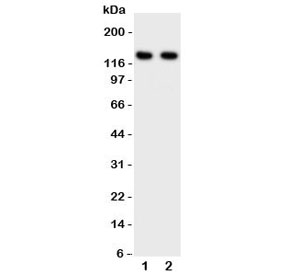
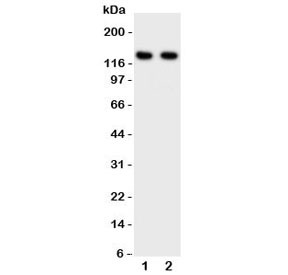
Zinc finger E-box-binding homeobox 2, also known as Smad Interacting Protein 1 (SIP1) or Zinc finger homeobox 1B (ZFHX1B), is a protein that in humans is encoded by the ZEB2 gene. The gene is a member of the ZEB1/Drosophila Zfh1 family of 2-handed zinc finger/homeodomain proteins and functions as a DNA-binding transcriptional repressor that interacts with activated<a href=../search_result.php?search_txt=smad>SMADs</a>, the transducers of<a href=../search_result.php?search_txt=tgf beta>TGF-beta</a>signaling, and interacts with the nucleosome remodeling and histone deacetylation(NURD) complex. By radiation hybrid analysis, Nagase et al.(1998) mapped the gene to chromosome 2. Wakamatsu et al.(2001) mapped the gene to chromosome 2q22. Vandewalle et al.(2005) showed that expression of mouse Sip1 in human epithelial cells caused a morphologic change from an epithelial to a mesenchymal phenotype. Expression of<a href=../search_result.php?search_txt=snai1>SNAI1</a>in epithelial cells triggers an epithelial-mesenchyme transition. Beltran et al.(2008) showed that synthesis of SIP1 was upregulated following SNAI1 expression in human cell lines.
Formulation
0.5mg/ml if reconstituted with 0.2ml sterile DI water
Host
Rabbit
Immunogen Region
An amino acid sequence from the C-terminus of human Smad Interacting Protein 1 (DMQQRRKYQRKQGFQ) was used as the immunogen for this SIP1 antibody (100% homologous in human, mouse and rat).
Isotype
IgG
Predicted Reactivity
Human, Mouse, Rat
Reactivity
Human, Mouse, Rat
Recombinant
No
Antigen
SIP1
Uniprot
O60315
Format
Antigen affinity purified
Purification
Antigen affinity
Storage
After reconstitution, the SIP1 antibody can be stored for up to one month at 4°C. For long-term, aliquot and store at -20°C. Avoid repeated freezing and thawing.
 Loading ....