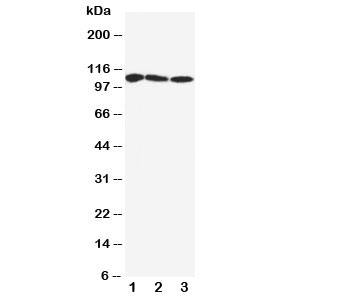
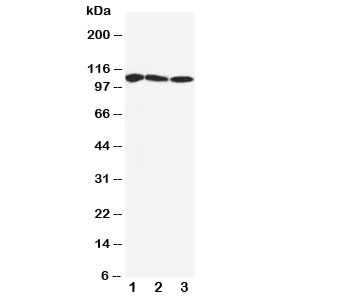
SERCA1 (Sarcoplasmic reticulum Ca(2+)-ATPase 1, also called ATP2A1, is an enzyme that in humans is encoded by the ATP2A1 gene. This gene encodes one of the SERCA Ca(2+)-ATPases, which are intracellular pumps located in the sarcoplasmic or endoplasmic reticula of muscle cells. This enzyme catalyzes the hydrolysis of ATP coupled with the translocation of calcium from the cytosol to the sarcoplasmic reticulum lumen, and is involved in muscular excitation and contraction. Zhang et al.(1995) determined that the human ATP2A1 gene is 26 kb long and contains 23 exons, 1 of which can be alternatively spliced. Overexpression of S1T, but not full-length SERCA1, induced ER stress in HeLa cells and amplified ER stress through the PERK(EIF2AK3)-EIF2A -ATF4 -CHOP (DDIT3) pathway. Mutations in this gene cause some autosomal recessive forms of Brody disease, characterized by increasing impairment of muscular relaxation during exercise.
Formulation
0.5mg/ml if reconstituted with 0.2ml sterile DI water
Host
Rabbit
Immunogen Region
An amino acid sequence from the middle region of human SERCA1 ATPase (EQREACRRACCFARVE) was used as the immunogen for this SERCA1 ATPase antibody (100% homologous in human, mouse and rat).
Isotype
IgG
Predicted Reactivity
Human, Mouse, Rat
Reactivity
Human, Mouse, Rat
Recombinant
No
Antigen
SERCA1 ATPase
Uniprot
O14983
Format
Antigen affinity purified
Purification
Antigen affinity
Storage
After reconstitution, the SERCA1 ATPase antibody can be stored for up to one month at 4°C. For long-term, aliquot and store at -20°C. Avoid repeated freezing and thawing.
Applications
IHC-P, WB
Dilution
Western blot: 0.5-1ug/ml,Immunohistochemistry (FFPE): 0.5-1ug/ml
 Loading ....