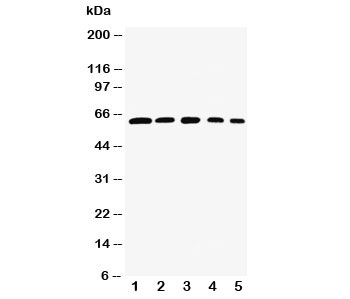
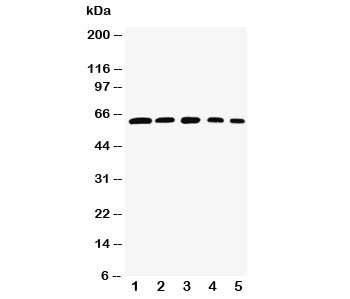
RelB (v-rel reticuloendotheliosis viral oncogene homolog B) is also known as IREL. By RT-PCR and immunocytochemical analyses, Clark et al.(1999) showed that protein expression correlated with dendritic cell activation. NF-kappa-B-inducing kinase is required for osteoclastogenesis in response to pathologic stimuli. Vaira et al.(2008) found that overexpression of RelB, but not RelA, rescued differentiation of mouse Nik -/- osteoclast precursors, indicating that blockade of the alternative NF-kappa-B pathway, rather than the classic pathway, is responsible for the osteoclastogenic defect in the absence of Nik. Using RelB -/- mice, they showed that the protein itself was required for RankL-induced osteoclastogenesis in vitro and for TNF-induced bone resorption in vivo. Both RelB -/- and Nik -/- mice were resistant to tumor-mediated osteolysis. Vaira et al.(2008) concluded that the alternative NF-kappa-B pathway, via RelB, plays an essential and unique role in RankL signaling toward osteoclast development.
Formulation
0.5mg/ml if reconstituted with 0.2ml sterile DI water
Host
Rabbit
Immunogen Region
Amino acids 393-413 (LPFTYLPRDHDSYGVDKKRKR-human) were used as the immunogen for this RelB antibody (100% mouse homology).
Isotype
IgG
Predicted Reactivity
Human, Mouse, Rat
Reactivity
Human, Mouse, Rat
Recombinant
No
Antigen
RelB
Uniprot
Q01201
Format
Antigen affinity purified
Purification
Antigen affinity
Storage
After reconstitution, the Rel B antibody can be stored for up to one month at 4°C. For long-term, aliquot and store at -20°C. Avoid repeated freezing and thawing.
 Loading ....