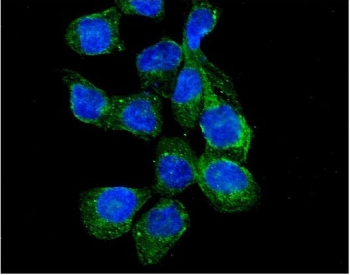
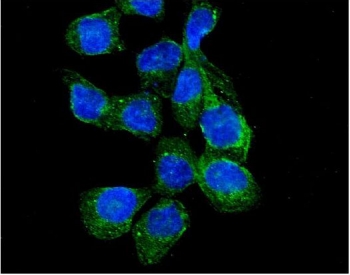
RASA1, also known as RAS p21 protein activator 1 or RASGAP, is a 120-kDa cytosolic human protein. The protein encoded by this gene is located in the cytoplasm and is part of the GAP1 family of GTPase-activating proteins. The gene product stimulates the GTPase activity of normal RAS p21 but not its oncogenic counterpart. Acting as a suppressor of RAS function, the protein enhances the weak intrinsic GTPase activity of RAS proteins resulting in the inactive GDP-bound form of RAS, thereby allowing control of cellular proliferation and differentiation. Mutations leading to changes in the binding sites of either protein are associated with basal cell carcinomas. Mutations also have been associated with hereditary capillary malformations (CM) with or without arteriovenous malformations (AVM) and Parkes Weber syndrome. Alternative splicing results in two isoforms where the shorter isoform, lacking the N-terminal hydrophobic region but retaining the same activity, appears to be abundantly expressed in placental but not adult tissues.
Formulation
0.5mg/ml if reconstituted with 0.2ml sterile DI water
Host
Rabbit
Immunogen Region
Amino acids AQQHVLKKLLAITELLQQKQNQYTKTNDVR of human RASA1 were used as the immunogen for the RASGAP antibody.
Isotype
IgG
Predicted Reactivity
Human
Reactivity
Human
Recombinant
No
Antigen
RASGAP
Uniprot
P20936
Format
Antigen affinity purified
Purification
Antigen affinity
Storage
After reconstitution, the RASGAP antibody can be stored for up to one month at 4°C. For long-term, aliquot and store at -20°C. Avoid repeated freezing and thawing.
Applications
FACS, IF, WB
Dilution
Western blot: 0.1-0.5ug/ml,Immunofluorescence (FFPE): 2-4ug/ml,Flow cytometry: 1-3ug/million cells
 Loading ....