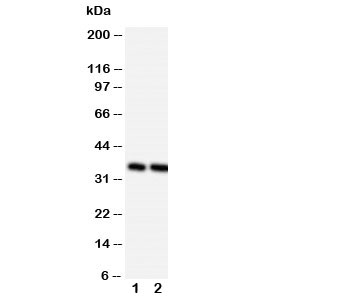
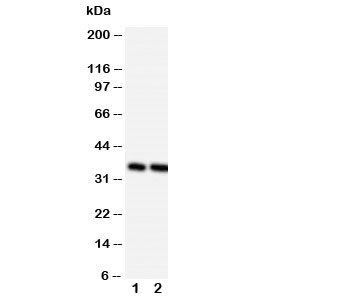
PDPN (Podoplanin), also called T1A, T1A2, GP36, OTS8 or AGGRUS, is a protein that in humans is encoded by the PDPN gene. This gene encodes a type-I integral membrane glycoprotein with diverse distribution in human tissues. The PDPN gene is mapped to chromosome 1 by the International radiation Hybrid mapping consortium. The physiological function of PDPN may be related to its mucin-type character. The specific function of this protein has not been determined but it has been proposed as a marker of lung injury. Immunohistochemical analysis of PDPN in placenta, kidney, lung, and nasal polyps showed expression at the apical plasma membrane of vascular endothelial cells and in alveolar epithelial cells. Overexpression of rat PDPN in human and rodent endothelial cells promoted formation of elongated cell extensions and significantly increased endothelial cell adhesion, migration, and tube formation. Inhibition of PDPN expression by small interfering RNAs decreased cell adhesion in cultured human dermal lymphatic endothelial cells.
Formulation
0.5mg/ml if reconstituted with 0.2ml sterile DI water
Host
Rabbit
Immunogen Region
An amino acid sequence from the C-terminus of rat Podoplanin/gp36 (VVMRKISGRFSP) was used as the immunogen for this Podoplanin antibody.
Isotype
IgG
Predicted Reactivity
Mouse, Rat
Reactivity
Rat, Mouse
Recombinant
No
Antigen
Podoplanin
Uniprot
Q64294
Format
Antigen affinity purified
Purification
Antigen affinity
Storage
After reconstitution, the Podoplanin antibody can be stored for up to one month at 4°C. For long-term, aliquot and store at -20°C. Avoid repeated freezing and thawing.
 Loading ....