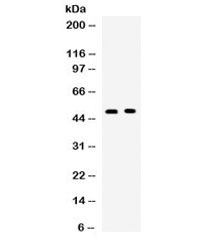
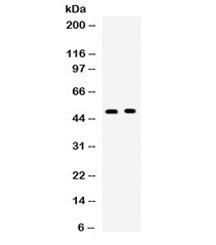
OX40 (CD134) and its binding partner, OX40L (CD252), are members of the tumor necrosis factor receptor/tumor necrosis factor superfamily, is known to break an existing state of tolerance in malignancies, leading to a reactivation of antitumor immunity. The interaction between the proteins plays an important role in antigen-specific T-cell expansion and survival. OX40 and OX40L also regulate cytokine production from T cells, antigen-presenting cells, natural killer cells, and natural killer T cells, and modulate cytokine receptor signaling. In line with these important modulatory functions, OX40-OX40L interactions have been found to play a central role in the development of multiple inflammatory and autoimmune diseases, making them attractive candidates for intervention in the clinic. Conversely, stimulating OX40 has shown it to be a candidate for therapeutic immunization strategies for cancer and infectious disease.
Formulation
0.5mg/ml if reconstituted with 0.2ml sterile DI water
Host
Rabbit
Immunogen Region
Amino acids AILLALYLLRRDQRLPPDAHKPP of human CD134/OX40 were used as the immunogen for the OX40 antibody.
Isotype
IgG
Predicted Reactivity
Human
Reactivity
Human
Recombinant
No
Subcellular Location
Cytoplasmic, membranous
Antigen
OX40
Uniprot
P43489
Format
Antigen affinity purified
Purification
Antigen affinity
Storage
After reconstitution, the OX40 antibody can be stored for up to one month at 4°C. For long-term, aliquot and store at -20°C. Avoid repeated freezing and thawing.
Applications
FACS, IHC-P, WB
Dilution
Western blot: 0.1-0.5ug/ml,Immunohistochemistry (FFPE): 0.5-1ug/ml,Flow cytometry: 1-3ug/million cells
 Loading ....