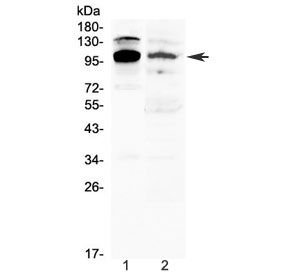
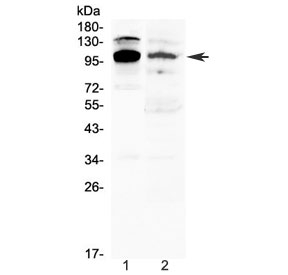
NFATC1 (Nuclear factor of activated T-cells, cytoplasmic 1), also known as NFATC or NFAT2, is a protein that in humans is encoded by the NFATC1 gene. And it is also a component of the nuclear factor of activated T cells DNA-binding transcription complex. The NFATC1 gene is mapped on 18q23. Proteins belonging to this family of transcription factors play a central role in inducible gene transcription during immune response. NFATC1 was not detected in brain, liver, or kidney. NFATC1 is an inducible nuclear component which functions as a major molecular target for the immunosuppressive drugs such as cyclosporin A. The solution structure of the binary complex formed between the core DNA-binding domain of human NFATC1 and the 12-bp oligonucleotide duplex containing the ARRE2 DNA site from the IL2 promoter. Nfatc1 was expressed exclusively in mouse hair follicle stem cells, and using gain- and loss-of-function approaches, and Nfatc1 inhibited stem cell activation.
Formulation
0.5mg/ml if reconstituted with 0.2ml sterile DI water
Host
Rabbit
Immunogen Region
A recombinant human protein corresponding to amino acids Q589-K652 (specific to isoforms A/B/C) was used as the immunogen for the NFAT2 antibody.
Isotype
IgG
Predicted Reactivity
Human, Mouse, Rat
Reactivity
Rat, Human, Mouse
Recombinant
No
Subcellular Location
Cytoplasmic, nuclear
Antigen
NFAT2
Uniprot
O95644
Buffer
Lyophilized from 1X PBS with 2.5% BSA, 0.025% sodium azide
Format
Antigen affinity purified
Purification
Antigen affinity
Storage
After reconstitution, the NFAT2 antibody can be stored for up to one month at 4°C. For long-term, aliquot and store at -20°C. Avoid repeated freezing and thawing.
 Loading ....