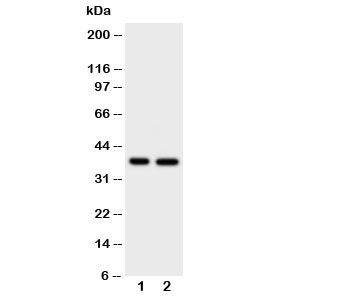
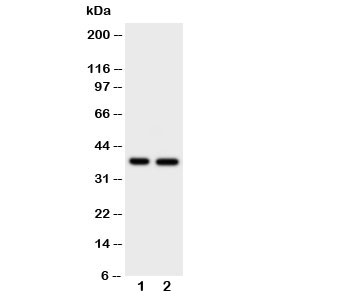
BCL2L3, also known as Myeloid cell leukemia sequence 1, encodes an anti-apoptotic protein, which is a member of the Bcl-2 family. Alternative splicing results in multiple transcript variants. The longest gene product (isoform 1) enhances cell survival by inhibiting apoptosis while the alternatively spliced shorter gene products(isoform 2 and isoform 3) promote apoptosis and are death-inducing. Using the methods of somatic cell hybrid analysis and fluorescence in situ hybridization), the MCL-1 gene is mapped to human 1q21. MCL-1is a critical and specific regulator essential for ensuring the homeostasis of early hematopoietic progenitors. Phosphorylation of MCL-1 directs its interaction with the tumor suppressor protein FBW7, which is the substrate-binding component of a ubiquitin ligase complex. The polyubiquitylation of MCL-1 then targets it for proteasomal degradation. Degradation was blocked in patient-derived tumor cells that lacked FBW7 or had loss-of-function mutations in FBW7, conferring resistance to antitubulin agents and promoting chemotherapeutic-induced polyploidy.
Formulation
0.5mg/ml if reconstituted with 0.2ml sterile DI water
Host
Rabbit
Immunogen Region
Amino acids 303-325 (RDWLVKQRGWDGFVEFFHVEDLE-human) were used as the immunogen for this MCL-1 antibody.
Isotype
IgG
Predicted Reactivity
Human
Reactivity
Human
Recombinant
No
Antigen
MCL-1
Uniprot
Q07820
Format
Antigen affinity purified
Purification
Antigen affinity
Storage
After reconstitution, the MCL-1 antibody can be stored for up to one month at 4°C. For long-term, aliquot and store at -20°C. Avoid repeated freezing and thawing.
 Loading ....