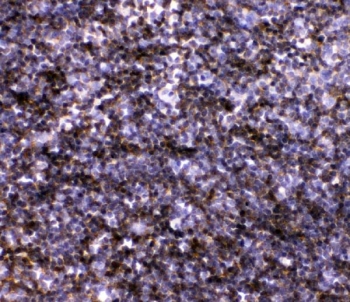
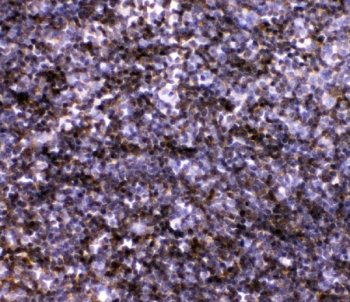
Interleukin 7 is a protein that in humans is encoded by the IL7 gene. The protein encoded by this gene is a cytokine important for B and T cell development. This cytokine and the hepatocyte growth factor (HGF) form a heterodimer that functions as a pre-pro-B cell growth-stimulating factor. And it is found to be a cofactor for V(D)J rearrangement of the T cell receptor beta (TCRB) during early T cell development. In addition, this cytokine can be produced locally by intestinal epithelial and epithelial goblet cells, and may serve as a regulatory factor for intestinal mucosal lymphocytes. Knockout studies in mice suggested that this cytokine plays an essential role in lymphoid cell survival. Alternative splicing results in multiple transcript variants encoding distinct isoforms. Additional splice variants have been described but their presence in normal tissues has not been confirmed.
Formulation
0.5mg/ml if reconstituted with 0.2ml sterile DI water
Host
Rabbit
Immunogen Region
Amino acids 26-154 of mouse IL-7 were used as the immunogen for the IL-7 antibody.
Isotype
IgG
Predicted Reactivity
Mouse, Rat
Reactivity
Mouse, Rat
Recombinant
No
Antigen
IL-7
Uniprot
P10168
Format
Antigen affinity purified
Purification
Antigen affinity
Storage
After reconstitution, the IL-7 antibody can be stored for up to one month at 4°C. For long-term, aliquot and store at -20°C. Avoid repeated freezing and thawing.
Applications
IHC-P, WB
Dilution
Western blot: 0.1-0.5ug/ml,Immunohistochemistry (FFPE): 2-5ug/ml
 Loading ....