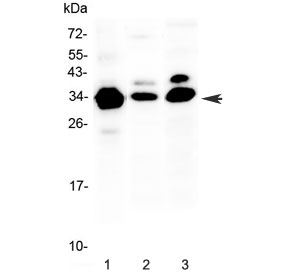
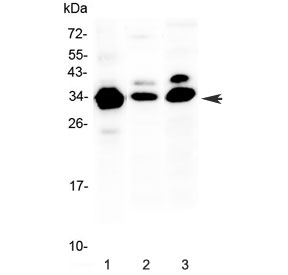
Interleukin-1 beta (IL-1b) is a potent stimulator of bone resorption whose gene is mapped to 2q14, and has been implicated in the pathogenesis of high bone turnover and osteoporosis. IL-1b, a prominent microglia-derived cytokine, caused oligodendrocyte death in coculture with astrocytes and microglia, but not in pure culture of oligodendrocytes alone. It also can cause nuclear export of a specific NCOR corepressor complex, resulting in derepression of a specific subset of nuclear factor-kappa-B (NFKB)-regulated genes. Furthermore, Microenvironmental IL-1b and, to a lesser extent, IL-1? are required for in vivo angiogenesis and invasiveness of different tumor cells. Additional, the cooperation of IL-1b and PDGFB induces contractile-to-synthetic phenotype modulation of human aortic smooth muscle cells in culture. Moreover, the association with disease may be explained by the biologic properties of IL-1b, which is an important proinflammatory cytokine and a powerful inhibitor of gastric acid secretion.
Formulation
0.5mg/ml if reconstituted with 0.2ml sterile DI water
Host
Rabbit
Immunogen Region
A recombinant human protein corresponding to amino acids A117-S269 was used as the immunogen for the IL-1 beta antibody.
Isotype
IgG
Predicted Reactivity
Human, Mouse, Rat
Reactivity
Human, Mouse, Rat
Recombinant
No
Antigen
IL1 beta
Uniprot
P01584
Buffer
Lyophilized from 1X PBS with 2.5% BSA, 0.025% sodium azide
Format
Antigen affinity purified
Purification
Antigen affinity
Storage
After reconstitution, the IL-1 beta antibody can be stored for up to one month at 4°C. For long-term, aliquot and store at -20°C. Avoid repeated freezing and thawing.
 Loading ....