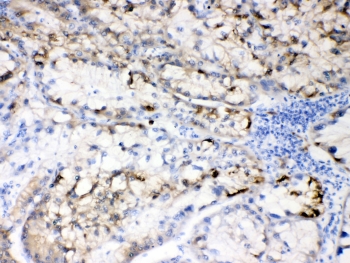
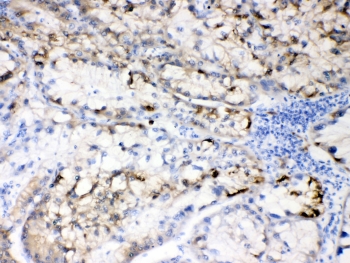
Hepatitis B virus, abbreviated HBV, is a species of the genus Orthohepadnavirus, which is likewise a part of the Hepadnaviridae family of viruses. This virus causes the disease hepatitis B. It consists of HBsAg, HBcAg (HBeAg is a splice variant), Hepatitis B virus DNA polymerase and HBx. Among these, HBsAg (also known as the Australia antigen) is the surface antigen of the hepatitis B virus (HBV). It indicates current hepatitis B infection. The viral envelope of an enveloped virus has different surface proteins from the rest of the virus which act as antigens. These antigens are recognized by antibody proteins that bind specifically to one of these surface proteins.
Formulation
0.5mg/ml if reconstituted with 0.2ml sterile DI water
Host
Rabbit
Immunogen Region
Amino acids 4-51 (WSSKPRQGMGTNLSVPNPLGFFPDHQLDPAFGANSNNPDWDFNPNKDQ) from the human HBV Large S protein were used as the immunogen for the Hepatitis B Virus antibody.
Isotype
IgG
Predicted Reactivity
Hepatitis B Virus (Human)
Reactivity
Hepatitis B Virus (Human)
Recombinant
No
Antigen
Hepatitis B Virus
Uniprot
D2X4M3
Buffer
Lyophilized from 1X PBS with 2.5% BSA, 0.025% sodium azide
Format
Antigen affinity purified
Purification
Antigen affinity
Storage
After reconstitution, the Hepatitis B Virus antibody can be stored for up to one month at 4°C. For long-term, aliquot and store at -20°C. Avoid repeated freezing and thawing.
Applications
WB, IHC-P
Dilution
Western blot: 0.5-1ug/ml,Immunohistochemistry (FFPE): 1-2ug/ml
 Loading ....