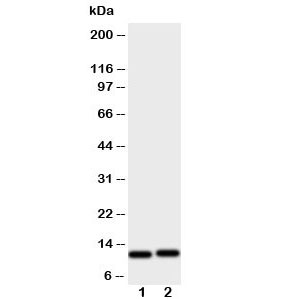
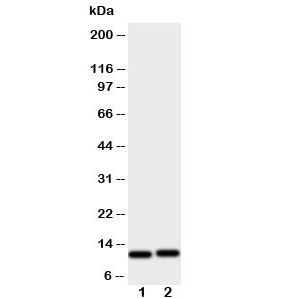
CXCL1 (Chemokine, CXC motif, Ligand 1), also called GRO1, SCYB1, GROA or MGSA, is a small cytokine belonging to the CXC chemokine family that was previously called GRO1 oncogene, GRO alpha, KC, Neutrophil-activating protein 3(NAP-3) and melanoma growth stimulating activity, alpha (MSGA-alpha). In humans, this protein is encoded by the CXCL1 gene. It is secreted by human melanoma cells, has mitogenic properties and is implicated in melanoma pathogenesis. It is expressed by macrophages, neutrophils and epithelial cells, and has neutrophil chemoattractant activity. CXCL1/GROA plays a role in spinal cord development by inhibiting the migration of oligodendrocyte precursors and is involved in the processes of angiogenesis, inflammation,wound healing, and tumorigenesis. Signaling through CXCR2, CXCL1/GROA inhibited oligodendrocyte precursor migration. The migrational arrest was rapid, reversible, and concentration dependent, and it reflected enhanced cell/substrate interactions.
Formulation
0.5mg/ml if reconstituted with 0.2ml sterile DI water
Host
Rabbit
Immunogen Region
An amino acid sequence from the C-terminus of human GROA (KMLNSDKSN) was used as the immunogen for this GRO alpha antibody.
Isotype
IgG
Predicted Reactivity
Human
Reactivity
Human
Recombinant
No
Antigen
GRO alpha
Uniprot
P09341
Format
Antigen affinity purified
Purification
Antigen affinity
Storage
After reconstitution, the GRO alpha antibody can be stored for up to one month at 4°C. For long-term, aliquot and store at -20°C. Avoid repeated freezing and thawing.
 Loading ....