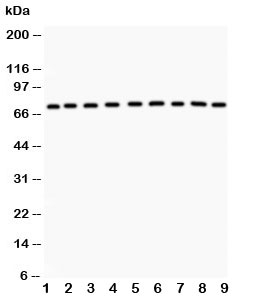
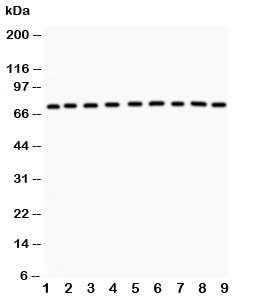
The Growth hormone receptor is found on human chromosome 5p13.1-p12 and mouse chromosome 15. Additionally, its gene has 9 exons that encode the receptor and several additional exons in the 5-prime untranslated region. The coding exons span at least 87 kb. The Growth hormone receptor consists of an extracellular domain of 246 amino acids, a single transmembrane domain, and a cytoplasmic domain. Exons 3 to 7 encode the extracellular domain. There are two isoforms of GHR in humans, generated by retention or exclusion of exon 3 during splicing: a full-length isoform and an isoform that lacks exon 3 (d3GHR). The two isoforms of GHR are expressed in the placenta and appeared to be due to alternative splicing. In cirrhosis, there is a state of acquired GH resistance, as defined by high circulating GH levels with low IGF1 levels. Moreover, Mutations in the Growth hormone receptor gene have been demonstrated as the cause of Laron syndrome , also known as the growth hormone insensitivity syndrome (GHIS).
Formulation
0.5mg/ml if reconstituted with 0.2ml sterile DI water
Host
Rabbit
Immunogen Region
An amino acid sequence from the middle region of mouse Growth hormone receptor (DKEHEVRVRSRQRSFEK) was used as the immunogen for this GHR antibody (100% rat homology).
Isotype
IgG
Predicted Reactivity
Mouse, Rat
Reactivity
Rat, Mouse
Recombinant
No
Antigen
GHR
Uniprot
P16882
Format
Antigen affinity purified
Purification
Antigen affinity
Storage
After reconstitution, the GHR antibody can be stored for up to one month at 4°C. For long-term, aliquot and store at -20°C. Avoid repeated freezing and thawing.
 Loading ....