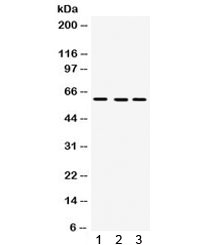
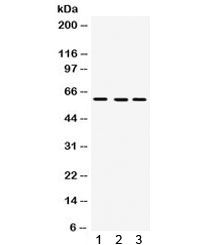
FMO3 (Flavin-containing Monooxygenase 3) is an enzyme that in humans is encoded by the FMO3 gene. The mammalian flavin-containing monooxygenases (FMO) represent a multigene family whose gene products are localized in the endoplasmic reticulum of many tissues. The FMO3 gene contains 1 noncoding and 8 coding exons. And the FMO3 gene is mapped on 1q24.3. Using quantitative RNase protection assays, FMO3 is present in low abundance in fetal liver and lung and in adult kidney and lung, and in much greater abundance in adult liver. By Western blot analysis of human liver microsomal samples ranging from 8 weeks gestation to 18 years of age, FMO1 is the major fetal isoform and FMO3 is the major adult isoform. FMO3 was expressed at intermediate levels until 11 years of age when a gender-independent increase in FMO3 expression was observed during puberty. Sufferers of trimethylaminuria may display a reduced ability to metabolize substrates for FMO3 such as nicotine. FMO3 metabolizes a number of drugs, including amphetamine, clozapine, deprenyl, metamphetamine, tamoxifen, ethionamide, thiacetazone, and sulindac sulfide.
Formulation
0.5mg/ml if reconstituted with 0.2ml sterile DI water
Host
Rabbit
Immunogen Region
Amino acids DMMNDINEKMEKKRKWFGKSETIQTDYIVY of human FMO3 were used as the immunogen for the FMO3 antibody.
Isotype
IgG
Predicted Reactivity
Human, Mouse, Rat
Reactivity
Human, Mouse, Rat
Recombinant
No
Antigen
FMO3
Uniprot
P31513
Format
Antigen affinity purified
Purification
Antigen affinity
Storage
After reconstitution, the FMO3 antibody can be stored for up to one month at 4°C. For long-term, aliquot and store at -20°C. Avoid repeated freezing and thawing.
 Loading ....