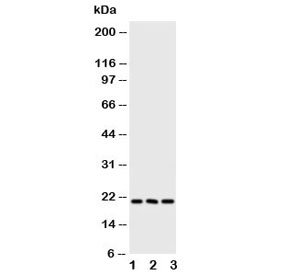
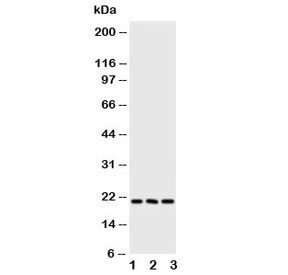
Fibroblast growth factor 21 is a protein that in humans is encoded by the FGF21 gene, a member of the fibroblast growth factor(FGF) family. Using RT-PCR, the protein was found to express in several types of adipose tissue in mice, including subcutaneous and epididymal fat pads and brown adipose tissue. The level of expression in adipose tissue was comparable to that in liver. FGF21 stimulates glucose uptake in adipocytes but not in other cell types. This effect is additive to the activity of insulin. FGF21 treatment of adipocytes is associated with phosphorylation of FRS2, a protein linking FGF receptors to the Ras/MAP kinase pathway. FGF21 also protects animals from diet-induced obesity when overexpressed in transgenic mice and lowers blood glucose and triglyceride levels when administered to diabetic rodents. Changes in expression due to suckling or nutritional manipulations were associated with changes in circulating free fatty acid and ketone body levels. In differentiated mouse brown adipocytes in culture, Fgf21 treatment increased the expression of thermogenic genes, caused higher total and uncoupled respiration, and enhanced glucose oxidation.
Formulation
0.5mg/ml if reconstituted with 0.2ml sterile DI water
Host
Rabbit
Immunogen Region
Amino acids 43-58 (QVRQRYLYTDDAQQTE-human) were used as the immunogen for this FGF21 antibody.
Isotype
IgG
Predicted Reactivity
Human, Mouse, Rat
Reactivity
Human, Mouse, Rat
Recombinant
No
Antigen
FGF21
Uniprot
Q9NSA1
Format
Antigen affinity purified
Purification
Antigen affinity
Storage
After reconstitution, the FGF21 antibody can be stored for up to one month at 4°C. For long-term, aliquot and store at -20°C. Avoid repeated freezing and thawing.
 Loading ....