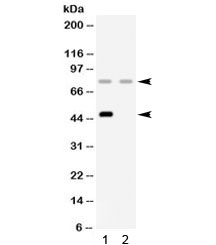
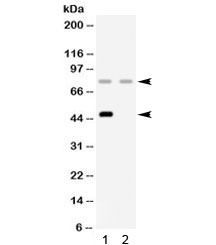
Complement factor I, also known as C3b/C4b inactivator, is a protein that in humans is encoded by the CFI gene. This gene encodes a serine proteinase that is essential for regulating the complement cascade. The encoded preproprotein is cleaved to produce both heavy and light chains, which are linked by disulfide bonds to form a heterodimeric glycoprotein. This heterodimer can cleave and inactivate the complement components C4b and C3b, and it prevents the assembly of the C3 and C5 convertase enzymes. Defects in this gene cause complement factor I deficiency, an autosomal recessive disease associated with a susceptibility to pyogenic infections. Mutations in this gene have been associated with a predisposition to atypical hemolytic uremic syndrome, a disease characterized by acute renal failure, microangiopathic hemolytic anemia and thrombocytopenia. Primary glomerulonephritis with immune deposits and age-related macular degeneration are other conditions associated with mutations of this gene.
Formulation
0.5mg/ml if reconstituted with 0.2ml sterile DI water
Host
Rabbit
Immunogen Region
Amino acids K19-D220 were used as the immunogen for the Factor I antibody.
Isotype
IgG
Predicted Reactivity
Human, Rat
Reactivity
Human, Rat
Recombinant
No
Antigen
Complement Factor I
Uniprot
P05156
Format
Antigen affinity purified
Purification
Antigen affinity
Storage
After reconstitution, the Factor I antibody can be stored for up to one month at 4°C. For long-term, aliquot and store at -20°C. Avoid repeated freezing and thawing.
Applications
FACS, WB
Dilution
Western blot: 0.1-0.5ug/ml,Flow cytometry: 1-3ug/million cells
 Loading ....