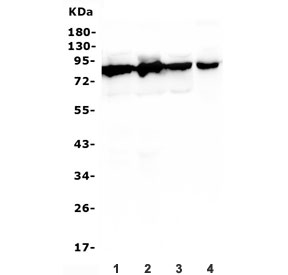
Dopamine beta-hydroxylase (DBH), also known as dopamine beta-monooxygenase, is an enzyme (EC1.14.17.1) that in humans is encoded by the DBH gene. Dopamine beta-hydroxylase catalyzes the chemical reaction. It is mapped to 9q34.2. The protein encoded by this gene is an oxidoreductase belonging to the copper type II, ascorbate-dependent monooxygenase family. The encoded protein, expressed in neuroscretory vesicles and chromaffin granules of the adrenal medulla, catalyzes the conversion of dopamine to norepinephrine, which functions as both a hormone and as the main neurotransmitter of the sympathetic nervous system. The enzyme encoded by this gene exists exists in both soluble and membrane-bound forms, depending on the absence or presence, respectively, of a signal peptide. Mutations in this gene cause dopamine beta-hydroxylate deficiency in human patients, characterized by deficits in autonomic and cardiovascular function, including hypotension and ptosis. Polymorphisms in this gene may play a role in a variety of psychiatric disorders.
Formulation
0.5mg/ml if reconstituted with 0.2ml sterile DI water
Host
Rabbit
Immunogen Region
A human recombinant protein (amino acids S40-N545) was used as the immunogen for the DBH antibody.
Isotype
IgG
Predicted Reactivity
Human, Mouse, Rat
Reactivity
Human, Mouse, Rat
Recombinant
No
Antigen
DBH
Uniprot
P09172
Buffer
Lyophilized from 1X PBS with 2% Trehalose and 0.025% sodium azide
Format
Antigen affinity purified
Purification
Affinity purified
Storage
After reconstitution, the DBH antibody can be stored for up to one month at 4°C. For long-term, aliquot and store at -20°C. Avoid repeated freezing and thawing.
Applications
Direct ELISA, WB
Dilution
Western blot: 0.25-0.5ug/ml,Direct ELISA: 0.1-0.5ug/ml
 Loading ....