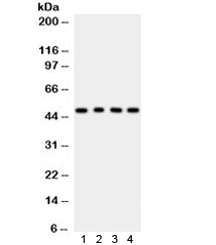
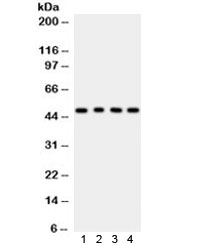
CTBP1, C-terminal-binding protein 1, is a protein that in humans is encoded by the CTBP1 gene. The CtBP1 protein binds to the C-terminus of adenovirus E1A proteins. This gene is mapped to 4p16.This phosphoprotein is a transcriptional repressor (corepressor) and may play a role during cellular proliferation. This protein and the product of a second closely related gene, CTBP2, can dimerize. CtBP1 and CtBP2 preferentially associate with the E1A via a 5 amino acid motif, PLDLS, to repress E1A induced oncogenesis and cellular transformation. CtBP1 is expressed from embryo to adult, but CtBP2 is mainly expressed during embryogenesis. During skeletal and T cell development, CtBP1 and CtBP2 associate with the PLDLSL domain of ?EF1, a cellular zinc finger-homeodomain protein, and thereby enhances ?EF1-induced transcriptional silencing. In addition, CtBP complexes with CtIP, a 125 kDa protein that recognizes distinctly different protein motifs from CtBP. CtIP binds to the BRCT repeats within the breast cancer gene BRCA1 and enables CtBP to influence BRCA1 activity. Both proteins can also interact with a polycomb group protein complex which participates in regulation of gene expression during development. Alternative splicing of transcripts from this gene results in multiple transcript variants.
Formulation
0.5mg/ml if reconstituted with 0.2ml sterile DI water
Host
Rabbit
Immunogen Region
Amino acids HGLPPVAHPPHAPSPGQTVKPEADRDHASDQL of human CTBP1 were used as the immunogen for the CTBP1 antibody.
Isotype
IgG
Predicted Reactivity
Human, Mouse, Rat
Reactivity
Human, Mouse, Rat
Recombinant
No
Antigen
CTBP1
Uniprot
Q13363
Format
Antigen affinity purified
Purification
Antigen affinity
Storage
After reconstitution, the CTBP1 antibody can be stored for up to one month at 4°C. For long-term, aliquot and store at -20°C. Avoid repeated freezing and thawing.
Applications
IHC-P, WB
Dilution
Western blot: 0.1-0.5ug/ml,Immunohistochemistry (FFPE): 0.5-1ug/ml
 Loading ....