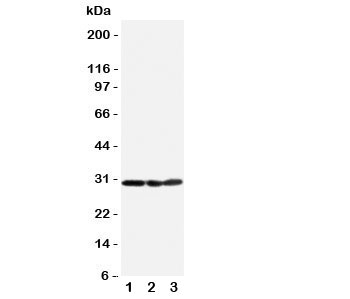
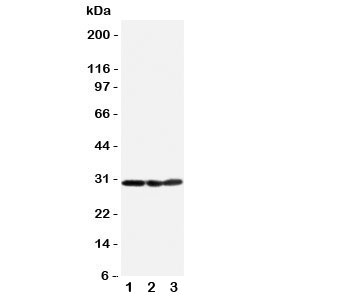
Catechol O-methyltransferase, also called COMT, is one of the major mammalian enzymes involved in the metabolic degradation of catecholamines. This gene is mapped to 22q11.21. Catechol-O-methyltransferase catalyzes the transfer of a methyl group from S-adenosylmethionine to catecholamines, including the neurotransmitters dopamine, epinephrine, and norepinephrine. This O-methylation results in one of the major degradative pathways of the catecholamine transmitters. In addition to its role in the metabolism of endogenous substances, COMT is important in the metabolism of catechol drugs used in the treatment of hypertension, asthma, and Parkinson disease. It is found in two forms in tissues, a soluble form (S-COMT) and a membrane-bound form (MB-COMT). The differences between the two forms reside within the N-termini.
Formulation
0.5mg/ml if reconstituted with 0.2ml sterile DI water
Host
Rabbit
Immunogen Region
An amino acid sequence from the N-terminus of human Catechol O-methyltransferase (DKKGKIVDAVIQEHQ) was used as the immunogen for this COMT antibody.
Isotype
IgG
Predicted Reactivity
Human
Reactivity
Human
Recombinant
No
Antigen
COMT
Uniprot
P21964
Format
Antigen affinity purified
Purification
Antigen affinity
Storage
After reconstitution, the COMT antibody can be stored for up to one month at 4°C. For long-term, aliquot and store at -20°C. Avoid repeated freezing and thawing.
Applications
WB, IHC-P
Dilution
Western blot: 0.5-1ug/ml,Immunohistochemistry (FFPE): 0.5-1ug/ml
 Loading ....