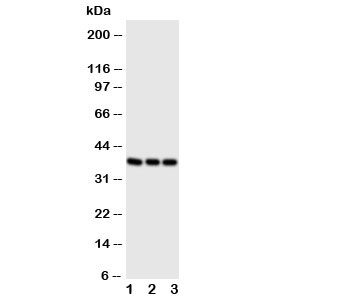
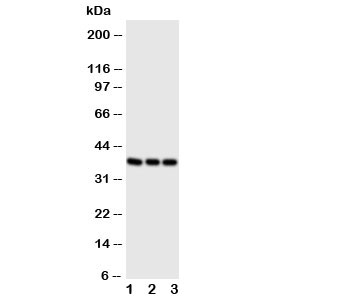
Cluster of Differentiation 1a, also known as CD1, is a human protein encoded by the CD1A gene. CD1a is one of five distinct CD1 genes that are variably conserved in different mammalian species. This gene encodes a member of the CD1 family of transmembrane glycoproteins, which are structurally related to the major histocompatibility complex (MHC) proteins and form heterodimers with beta-2-microglobulin. The CD1A gene is mapped on 1q23.1. The CD1 proteins mediate the presentation of primarily lipid and glycolipid antigens of self or microbial origin to T cells. CD1A is concentrated in the early or recycling endosome. Moody et al.(2004) reported that CD1a presents to T cells a family of previously unknown lipopeptides from Mycobacterium tuberculosis, named didehydroxymycobactins because of their structural relation to mycobactin siderophores.The protein encoded by this gene localizes to the plasma membrane and to recycling vesicles of the early endocytic system. Apolipoprotein E (107741) binds lipid antigens and delivers them by receptor-mediated uptake into endosomal compartments containing CD1 in antigen-presenting cells.
Formulation
0.5mg/ml if reconstituted with 0.2ml sterile DI water
Host
Rabbit
Immunogen Region
An amino acid sequence from the middle region of human CD1a (AKHFCKVLNQNQHEND) was used as the immunogen for this CD1a antibody.
Isotype
IgG
Predicted Reactivity
Human
Reactivity
Human
Recombinant
No
Antigen
CD1a
Uniprot
P06126
Format
Antigen affinity purified
Purification
Antigen affinity
Storage
After reconstitution, the CD1a antibody can be stored for up to one month at 4°C. For long-term, aliquot and store at -20°C. Avoid repeated freezing and thawing.
 Loading ....