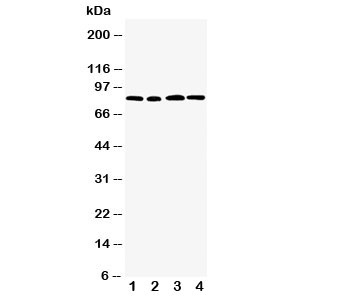
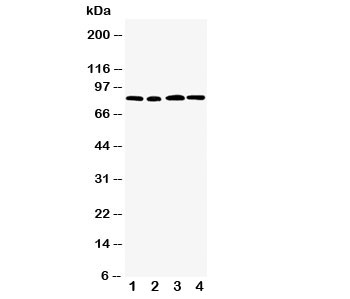
CD168, or HMMR (Hyaluronan-mediated motility receptor), is a protein which in humans is encoded by the HMMR gene. RHAMM was originally discovered as a soluble protein that altered migratory cell behavior and bound to hyaluronan, HMMR is less well studied than the main hyaluronan (HA) receptor, CD44. In contrast to CD44 and other cell-surface receptors which contain the classical membrane spanning domain and signal sequence for secretion from the endoplasmic reticulum/Golgi complex, CD168 does not contain a membrane spanning domain nor does the mRNA transcript contain a signal sequence. It normally is localized inside the cell and is only release by certain, poorly defined stimuli. The transport of CD168 to the extracellular space still is unclear but may involve transport channels or proteins, flippase activity, or exocytosis. Intracellularly, it associates with microtubules and, working with BRCA1 and BARD1, plays a role in the regulation of mitosis. Extracellularly, it associates with CD44, and upon binding to HA, activates intracellular signaling pathways.
Formulation
0.5mg/ml if reconstituted with 0.2ml sterile DI water
Host
Rabbit
Immunogen Region
An amino acid sequence from the C-terminus of human CD168 (KEGNTNCYRAPMECQESWK) was used as the immunogen for this CD168 antibody.
Isotype
IgG
Predicted Reactivity
Human
Reactivity
Human
Recombinant
No
Antigen
CD168
Uniprot
O75330
Format
Antigen affinity purified
Purification
Antigen affinity
Storage
After reconstitution, the CD168 antibody can be stored for up to one month at 4°C. For long-term, aliquot and store at -20°C. Avoid repeated freezing and thawing.
Applications
WB, IHC-P
Dilution
Western blot: 0.5-1ug/ml,Immunohistochemistry (FFPE): 0.5-1ug/ml
 Loading ....