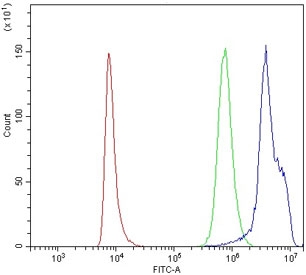
CD154 (CD40 ligand) is a type II membrane protein of 261 amino acids on activated T cells that induces B cell proliferation and immunoglobulin secretion. It has homology with tumour necrosis factor-alpha and -beta, and has important functions in B-cell activation and differentiation. Human CD154 with 5 exons, is mapped to the proximal region of the mouse X chromosome on Xq26.3-27.1, and can be detected on T cells but is absent from B cells and monocytes. Since it is expressed on platelets and released from them on activation, its predictive value as a marker for clinical outcome and the therapeutic effect of inhibition of glycoprotein IIb /IIIa receptor in patients with acute coronary syndromes was investigated. The soluble for of the protein may be involved in the process of restenosis and that it exerts its effect by triggering a complex group of inflammatory reactions on endothelial and mononuclear cells. CD154 plays a central role in the pathophysiology of acute coronary syndromes, and has a role in the pathogenesis of coronary artery lesions.
Formulation
0.5mg/ml if reconstituted with 0.2ml sterile DI water
Host
Rabbit
Immunogen Region
Recombinant human protein (amino acids E76-H249) was used at the immunogen for the CD154 antibody.
Isotype
IgG
Predicted Reactivity
Human, Mouse, Rat
Reactivity
Rat, Human, Mouse
Recombinant
No
Antigen
CD154
Uniprot
P29965
Buffer
Lyophilized from 1X PBS with 2% Trehalose
Format
Purified
Purification
Antigen affinity purified
Storage
After reconstitution, the CD154 antibody can be stored for up to one month at 4°C. For long-term, aliquot and store at -20°C. Avoid repeated freezing and thawing.
Applications
FACS, WB, Direct ELISA
Dilution
Western blot: 0.5-1ug/ml,Flow cytometry: 1-3ug/million cells,Direct ELISA: 0.1-0.5ug/ml
 Loading ....