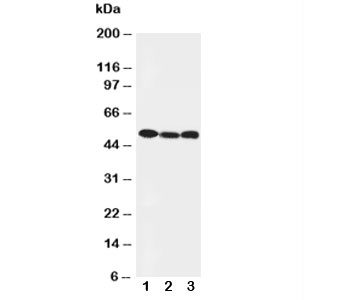
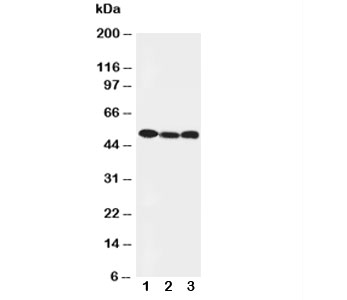
Bellini-1 is a protein that in humans is encoded by the BECN1 gene, also known as BECN1, ATG6, VPS30, Coiled-coil myosin-like BCL2-interacting protein, Protein GT197, autophagy-related gene 6 (ATG6). Beclin 1 and its binding partner class III phosphoinositide 3-kinase (PI3K), also named Vps34, are required for the initiation of the formation of the autophagosome in autophagy. The gene encodes a novel 450-amino acid protein containing a coiled-coil region, within which it has limited homology to myosin-like proteins. Northern blot analysis of mouse and adult human tissues revealed widespread expression. A 2.2-kb transcript was present at highest levels in human skeletal muscle and at detectable levels in all tissues examined. In some tissues, additional 1.7- and 1.4-kb transcripts were observed, suggesting the presence of alternatively spliced transcripts. Immunoperoxidase staining of human hippocampus and frontal cortex sections revealed Beclin 1 immunoreactivity in many neurons throughout these regions, as well as in some glial cells. It protects against infection by a neurovirulent strain of Sindbis virus that is known to overcome the protective effects of Bcl2. Liang et al. showed that Beclin 1 reduced Sindbis virus replication in mouse brain and reduced Sindbis virus-induced cell death in mouse brain.
Formulation
0.5mg/ml if reconstituted with 0.2ml sterile DI water
Host
Rabbit
Immunogen Region
Amino acids 222-237 (LDQEEAQYQREYSEFK) were used as the immunogen for this Beclin 1 antibody (100% homologous in human, mouse and rat).
Isotype
IgG
Predicted Reactivity
Human, Mouse, Rat
Reactivity
Human, Mouse, Rat
Recombinant
No
Antigen
Beclin 1
Uniprot
Q14457
Format
Antigen affinity purified
Purification
Antigen affinity
Storage
Store the lyophilized Beclin 1 antibody at 4°C. After reconstitution, aliquot and store at -20°C. Avoid repeated freezing and thawing.
 Loading ....