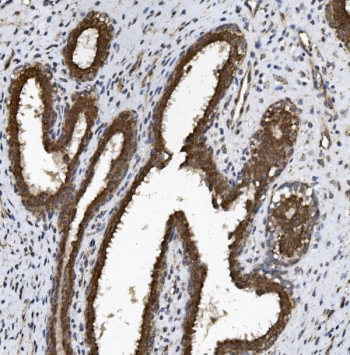
ABCG2 (Atp-binding cassette, subfamily g, member 2) also known as ABCP, BCRP or MRX, is a protein that in humans is encoded by the ABCG2 gene. It is mapped on 4q22.1. The ABCG2 gene encodes a membrane transporter belonging to the ATP-binding cassette (ABC) superfamily of membrane transporters, which are involved in the trafficking of biologic molecules across cell membranes. The ABCG2 protein is also a high capacity transporter for uric acid excretion in the kidney, liver, and gut. In vitro assays of isolated membrane preparations revealed a high-capacity, vanadate-sensitive ATPase activity associated with ABCG2 expression that was stimulated by compounds known to be transported by this protein. ABCG2 is likely functioning as a homodimer or homooligomer in this expression system since it is unlikely that putative Sf9 transport partners would be overexpressed at similarly high levels. Abcg2 transports pheophorbide-a, which occurs in various plant-derived foods and food supplements and is highly efficient in limiting its uptake from ingested food. ABCG2 is a major factor in the concentrative transfer of drugs, carcinogens, and dietary toxins to the milk of mice, cows, and humans.
Formulation
0.5mg/ml if reconstituted with 0.2ml sterile DI water
Host
Rabbit
Immunogen Region
Recombinant human protein (amino acids M1-R378) was used as the immunogen for the BCRP antibody.
Isotype
IgG
Predicted Reactivity
Human, Mouse, Rat
Reactivity
Rat, Human, Mouse
Recombinant
No
Antigen
ABCG2
Uniprot
Q9UNQ0
Buffer
Lyophilized from 1X PBS with 2% Trehalose and 0.025% sodium azide
Format
Antigen affinity purified
Purification
Affinity purified
Storage
After reconstitution, the BCRP antibody can be stored for up to one month at 4°C. For long-term, aliquot and store at -20°C. Avoid repeated freezing and thawing.
Applications
IHC-P, WB, Direct ELISA
Dilution
Western blot: 0.5-1ug/ml,Immunohistochemistry: 1-2ug/ml,Direct ELISA: 0.1-0.5ug/ml
 Loading ....