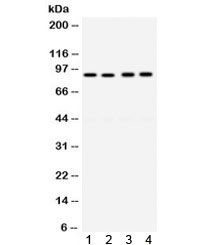
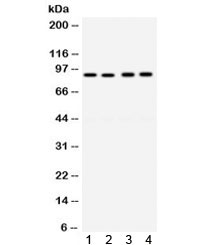
B-lymphocyte antigen CD19, also known as CD19 (Cluster of Differentiation 19), is a protein that in humans is encoded by the CD19 gene. It is found on the surface of B-cells, a type of white blood cell. Lymphocytes proliferate and differentiate in response to various concentrations of different antigens. The ability of the B cell to respond in a specific, yet sensitive manner to the various antigens is achieved with the use of low-affinity antigen receptors. The CD19 gene encodes a cell surface molecule that assembles with the antigen receptor of B lymphocytes in order to decrease the threshold for antigen receptor-dependent stimulation.
Formulation
0.5mg/ml if reconstituted with 0.2ml sterile DI water
Host
Rabbit
Immunogen Region
Amino acids LVGILHLQRALVLRRKRKRMTDPTRRFFKVT of human CD19 were used as the immunogen for the anti-CD19 antibody.
Isotype
IgG
Predicted Reactivity
Human
Reactivity
Human
Recombinant
No
Subcellular Location
Cytoplasmic, membrane
Antigen
CD19
Uniprot
P15391
Format
Antigen affinity purified
Purification
Antigen affinity
Storage
After reconstitution, the anti-CD19 antibody can be stored for up to one month at 4°C. For long-term, aliquot and store at -20°C. Avoid repeated freezing and thawing.
Applications
WB, IHC-P
Dilution
Western blot: 0.1-0.5ug/ml,Immunohistochemistry (FFPE): 0.5-1ug/ml
 Loading ....