Human thiol dioxygenases include cysteine dioxygenase (CDO) and cysteamine (2-aminoethanethiol) dioxygenase (ADO). CDO adds 2 oxygen atoms to free cysteine, whereas ADO adds 2 oxygen atoms to free cysteamine to form hypotaurine. It is demonstrated that mouse Ado has strong and specific dioxygenase activity in vitro towards cysteamine but not cysteine. Recombinant Ado was shown to bind iron. Overexpression of Ado in HepG2/C3A cells increased the production of hypotaurine from cysteamine. Similar results were found with human ADO. When endogenous expression of ADO was reduced by RNA-mediated interference, hypotaurine production decreased. It is also noted that the demonstration of high levels of ADO in brain challenges the previous assumption that most of the taurine in the brain is a consequence of CDO activity.
Formulation
0.5mg/ml if reconstituted with 0.2ml sterile DI water
Host
Rabbit
Immunogen Region
Amino acids E49-E261 from the human protein were used as the immunogen for the ADO antibody.
Isotype
IgG
Predicted Reactivity
Human, Mouse, Rat
Reactivity
Rat, Human, Mouse
Recombinant
No
Subcellular Location
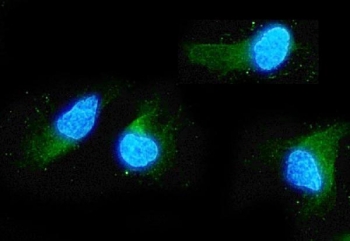
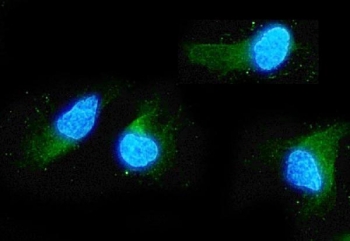
Cytoplasmic, membranous
Antigen
ADO
Uniprot
Q96SZ5
Buffer
Lyophilized from 1X PBS with 2.5% BSA and 0.025% sodium azide
Format
Antigen affinity purified
Purification
Antigen affinity
Storage
After reconstitution, the ADO antibody can be stored for up to one month at 4°C. For long-term, aliquot and store at -20°C. Avoid repeated freezing and thawing.
Applications
FACS, WB, IF/ICC
Dilution
Western blot: 0.5-1ug/ml,Flow cytometry: 1-3ug/million cells,Immunofluorescence: 2-4ug/ml
 Loading ....