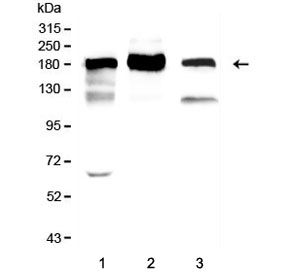
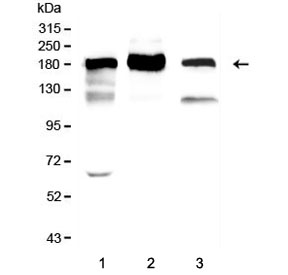
Angiotensin-converting enzyme, an exopeptidase, is a circulating enzyme that participates in the body's renin-angiotensin system(RAS), which mediates extracellular volume (i.e. that of the blood plasma, lymph and interstitial fluid), and arterial vasoconstriction. It is secreted by pulmonary and renal endothelial cells and catalyzes the conversion of decapeptide angiotensin I to octapeptide angiotensin II. Using a DNA marker at the growth hormone gene locus, which they characterized as 'extremely polymorphic' and which showed no recombination with ACE, the gene was mapped to 17q22-q24, consistent with the in situ hybridization mapping to 17q23. ACE, or kininase II, is a dipeptidyl carboxypeptidase that plays an important role in blood pressure regulation and electrolyte balance by hydrolyzing angiotensin I into angiotensin II, a potent vasopressor, and aldosterone-stimulating peptide. The enzyme is also able to inactivate bradykinin, a potent vasodilator.
Formulation
0.5mg/ml if reconstituted with 0.2ml sterile DI water
Host
Rabbit
Immunogen Region
Human partial recombinant protein (AA 651-864) was used as the immunogen for this ACE antibody.
Isotype
IgG
Predicted Reactivity
Human, Mouse, Rat
Reactivity
Mouse, Rat, Human
Recombinant
No
Antigen
ACE
Gene Id
1636
Format
Antigen affinity purified
Purification
Antigen affinity
Storage
After reconstitution, the ACE antibody can be stored for up to one month at 4°C. For long-term, aliquot and store at -20°C. Avoid repeated freezing and thawing.
Applications
IHC-P, IHC-F, WB, IF
Dilution
Western blot: 0.5-1ug/ml,Immunohistochemistry (FFPE): 0.5-1ug/ml,Immunohistochemistry (Frozen): 0.5-1ug/ml,Immunofluorescence: 2-4ug/ml
 Loading ....