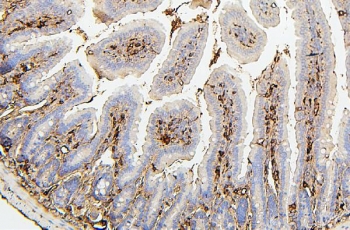
Serine/threonine-protein kinase PLK1, also known as polo-like kinase 1 (PLK-1) or serine/threonine-protein kinase 13 (STPK13), is an enzyme that in humans is encoded by the PLK1 (polo-like kinase1) gene. Plk1 is an early trigger for G2/M transition. It supports the functional maturation of the centrosome in late G2/early prophase and establishment of the bipolar spindle. Also, Plk1 phosphorylates and activates cdc25C, a phosphatase that dephosphorylates and activates the cyclinB/cdc2 complex. Studies have shown that the loss of PLK1 expression can induce pro-apoptotic pathways and inhibit growth. Based on yeast and murine studies of meiosis, human PLK1 may also have a regulatory function in meiosis.
Formulation
0.5mg/ml if reconstituted with 0.2ml sterile DI water
Host
Mouse
Immunogen Region
A human recombinant protein (amino acids K86-N430) was used as the immunogen for the PLK1 antibody.
Isotype
IgG2b
Predicted Reactivity
Human, Mouse, Rat, Monkey
Reactivity
Human, Mouse, Rat, Monkey
Recombinant
No
Antigen
PLK1
Uniprot
P53350
Clone No
6D11
Buffer
Lyophilized from 1X PBS with 2% Trehalose and 0.025% sodium azide
Format
Antigen affinity purified
Purification
Affinity purified
Storage
After reconstitution, the PLK1 antibody can be stored for up to one month at 4°C. For long-term, aliquot and store at -20°C. Avoid repeated freezing and thawing.
Applications
IHC-P, WB
Dilution
Western blot: 0.5-1ug/ml,Immunohistochemistry (FFPE): 1-2ug/ml
 Loading ....