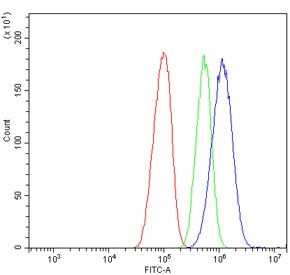
The ATP5MC1 gene is one of three human paralogs that encode membrane subunit c of the mitochondrial ATP synthase. It is mapped to 17q21.32. This gene encodes a subunit of mitochondrial ATP synthase. Mitochondrial ATP synthase catalyzes ATP synthesis, utilizing an electrochemical gradient of protons across the inner membrane during oxidative phosphorylation. ATP synthase is composed of two linked multi-subunit complexes: the soluble catalytic core, F1, and the membrane-spanning component, Fo, comprising the proton channel. The catalytic portion of mitochondrial ATP synthase consists of 5 different subunits (alpha, beta, gamma, delta, and epsilon) assembled with a stoichiometry of 3 alpha, 3 beta, and a single representative of the other 3. The proton channel seems to have nine subunits (a, b, c, d, e, f, g, F6 and 8). This gene is one of three genes that encode subunit c of the proton channel. Each of the three genes have distinct mitochondrial import sequences but encode the identical mature protein. Alternatively spliced transcript variants encoding the same protein have been identified.
Formulation
0.5mg/ml if reconstituted with 0.2ml sterile DI water
Host
Mouse
Immunogen Region
A human recombinant partial protein (amino acids D62-L113) was used as the immunogen for the ATP5MC1/2/3 antibody.
Isotype
IgG2b
Predicted Reactivity
Human, Mouse, Rat, Monkey
Reactivity
Human, Mouse, Rat, Monkey
Recombinant
No
Antigen
ATP5MC1/2/3
Uniprot
P05496
Clone No
12E9.
Format
Antigen affinity purified
Purification
Affinity purified
Storage
After reconstitution, the ATP5MC1/2/3 antibody can be stored for up to one month at 4°C. For long-term, aliquot and store at -20°C. Avoid repeated freezing and thawing.
Applications
FACS, WB
Dilution
Western blot: 1-2ug/ml,Flow cytometry: 1-3ug/million cells
 Loading ....